
How to Find Who Owns a Morgan County Property
Morgan County offers a parcel search built on three entry points. You can look up an address, an owner name, or a parcel number. The live parcel card returns a situs address, a mailing address, the owner field, and the legal description. Save all of it. That parcel identifier anchors the rest. Treat the result as a tax-roll entry. The Assessor keeps this data for assessment administration. The person named may not occupy the property.
The Recorder portal comes next. Search it by parcel or by party names to find the latest likely deed. Compare the grantee and the legal description against the Morgan County Assessor record. A newer deed means the two offices sit at different points in the transfer process. The Recorder does not perform title searches. This cross-check is public-record diligence, not a guarantee that title is clear.
- Search the situs address or parcel in the Morgan County Assessor's public roll.
- Copy the tax-roll owner, parcel number, mailing address, and legal description.
- Search the Morgan County Recorder index for the most recent deed that matches that same land.
- If an entity is named, verify the entity's public registration separately and keep the deed as the land record.
Where Morgan County Owner Information Comes From
The Assessor and the Recorder answer different questions. The Assessor's parcel search runs on parcel, name, and address. It maintains the tax-roll owner and mailing details. The Recorder's Research Portal indexes parties and their roles in filed instruments. County GIS places a parcel on a map. It is a location reference, not the definitive source for current vesting.
| Source | What it contributes | What it does not settle |
|---|---|---|
| Assessor roll | Tax-roll owner, parcel and address context, and valuation fields | Whether a transfer is legally complete |
| Recorder index | Recorded parties, instrument type, dates, and document reference | Whether title is free of every claim |
| County GIS | Visual parcel location and map context | Exact legal boundaries or occupancy |
| Utah business registry | Public entity registration information | Every beneficial owner of a parcel |
A Morgan County owner search sometimes turns up an LLC or another business name instead of a person. The business registry can confirm the entity is real and show its public registration details, though it does not replace a deed or reveal every party with an interest in the parcel.
Start with the Morgan County Assessor search, the official tax-roll entry point for owner of record details.
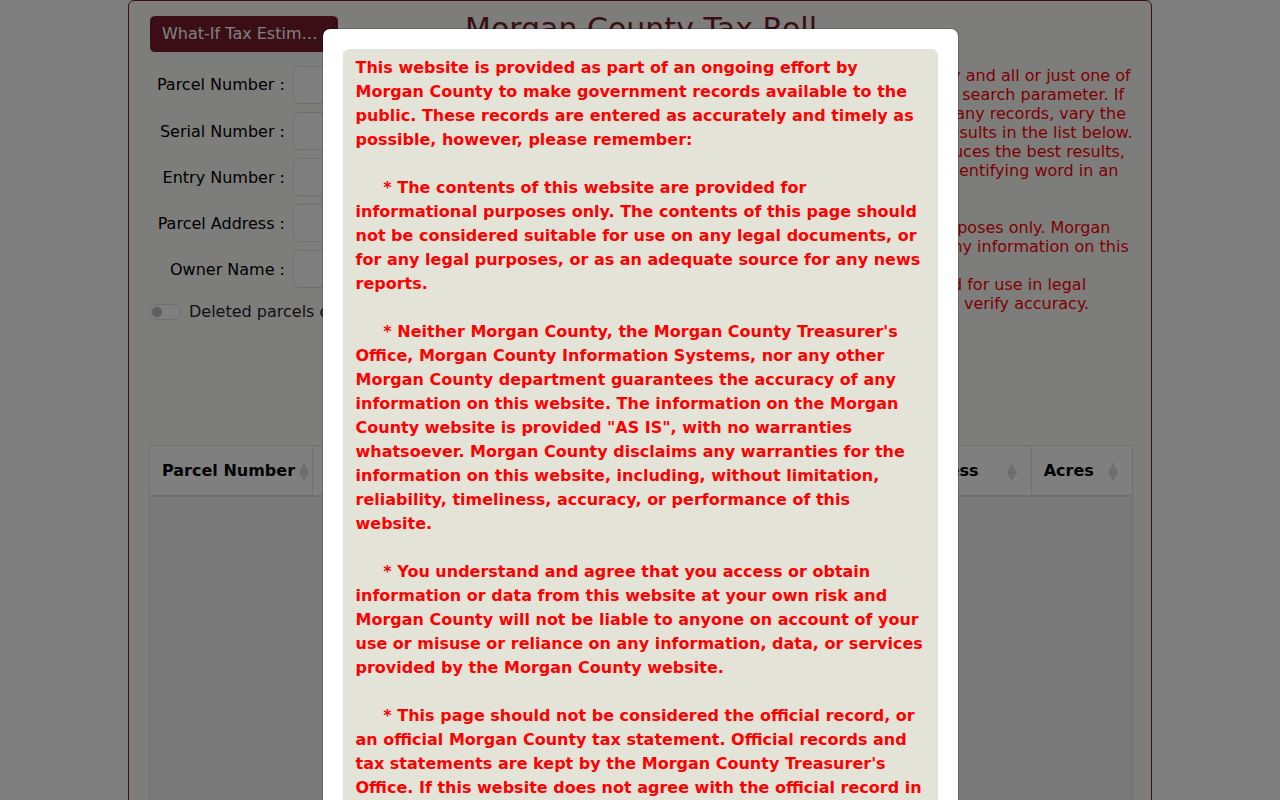
The live parcel card in the Assessor application displays the recorded owner, parcel number, and related tax-roll fields. Because its form is JavaScript-gated, confirm the exact fields in the application itself.
Which Morgan County Owner Source to Use
The right source depends on what "who owns" means. The current tax-roll owner lives with the Morgan County Assessor. The recorded transfer and its terms live with the Recorder. GIS settles parcel location questions when the boundary itself matters. A business name belongs in the state entity registry. A Morgan County property owner search works best when these sources agree on the same parcel and legal description.
| Source | Owner Info It Gives | Access |
|---|---|---|
| Assessor tax roll | Owner-of-record and mailing/situs context | Public Parcel/Name/Address Search |
| Recorder Research Portal | Recorded parties, roles, instrument references | Public index; image terms should be confirmed |
| Utah business registry | Public registration details for a named entity | State business search |
| County GIS | Map location and parcel context | Public ArcGIS viewer |
The tax roll names an owner for assessment purposes. It does not confirm who occupies the land. A mailing address may point to another home or a business. Dates matter too. Anyone searching who owns a property should weigh the record's purpose and date, especially after a recent transfer or when the owner is an entity.
Trusts, Estates, and LLCs in Morgan County Owner Records
A Morgan County deed may name an individual, a trust, an estate representative, or an LLC. Copy the exact name and capacity. A trustee may sign without holding the beneficial interest. The county index lists filed parties and their roles. It does not explain the relationships behind them.
For an LLC, Utah's Division of Corporations runs a Business Entity Search. Check the exact entity spelling there. Note any listed agent or status too. Then return to the Morgan County deed for the transfer. The two records serve different purposes. Neither supports assuming an agent, officer, member, or relative personally owns the parcel.
The Recorder's party-role field separates a grantor from a grantee. It is still an index description. Match the name against the parcel, document type, and legal description. Trustees and estate representatives can sign for a different legal interest than their own. A business registration names an agent. It may not name everyone behind the entity. So the defensible public answer to who owns this property is the owner named in the county record, with its date and limits attached.
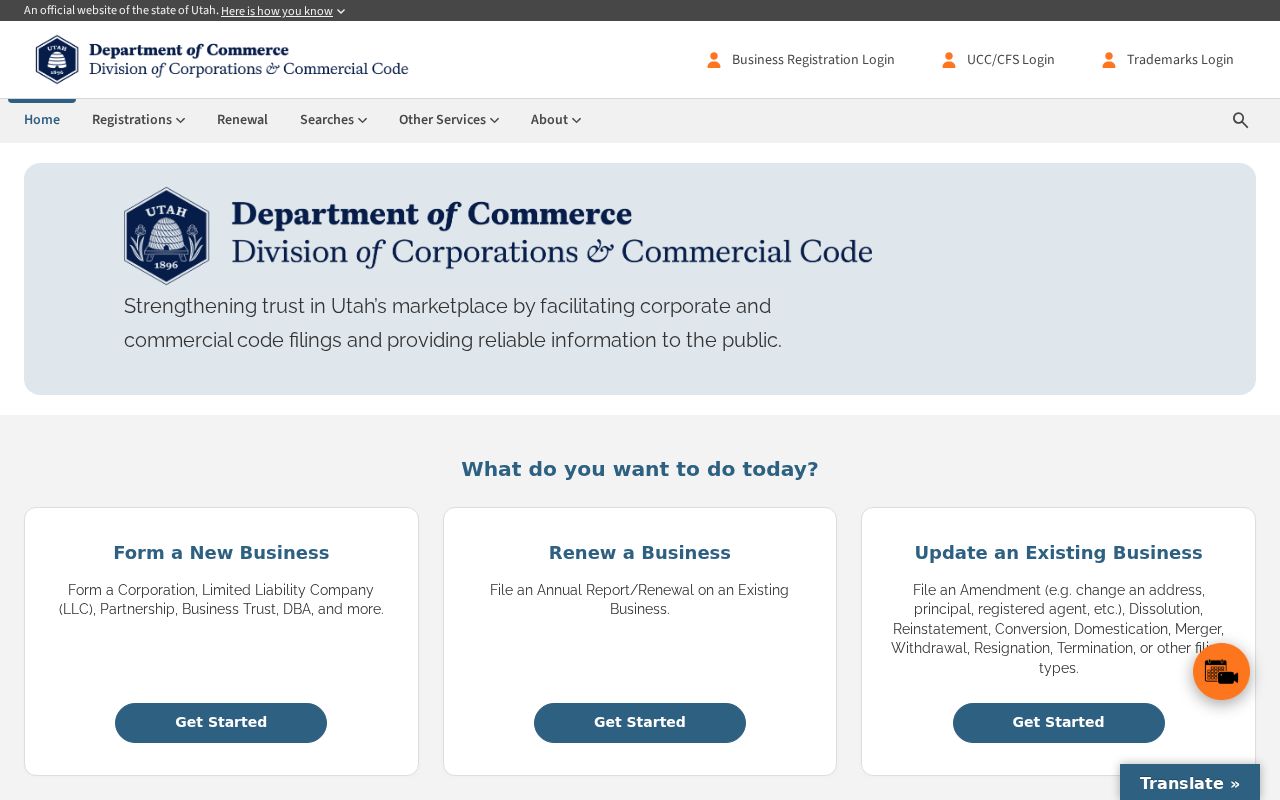
Entity registration is a cross-check, not a deed substitute.
Owner Mailing Address Is Not the Morgan County Situs
Every parcel carries two addresses. The situs shows where the land sits. The mailing address is simply where the tax bill goes, and the two often differ. An owner may live in another state. They may hold title through a company. Or they may rent the place out. Morgan County owner records list the tax-roll owner of record, never the occupants. So a tax bill proves nothing about who lives there. Anchor every match to the parcel number. That keeps the owner tied to the right land. A rural parcel may carry only a mailing-place name. Or a Morgan City directional address may follow an older convention. A location may fall under Utah's Address Confidentiality Program. There, public address fields may be suppressed or replaced.
Morgan County Property Watch Can Flag Later Filings
Morgan County Recorder offers a free Property Watch signup. Alerts arrive when new activity is recorded against a name or parcel. An alert is a prompt, not a title opinion. It cannot certify ownership. Check each notice against the party, parcel, and instrument in the Morgan County Recorder portal before acting on it. Something unfamiliar deserves the full document and qualified advice. The county's Property Watch enrollment form is linked from the Morgan County Recorder page.
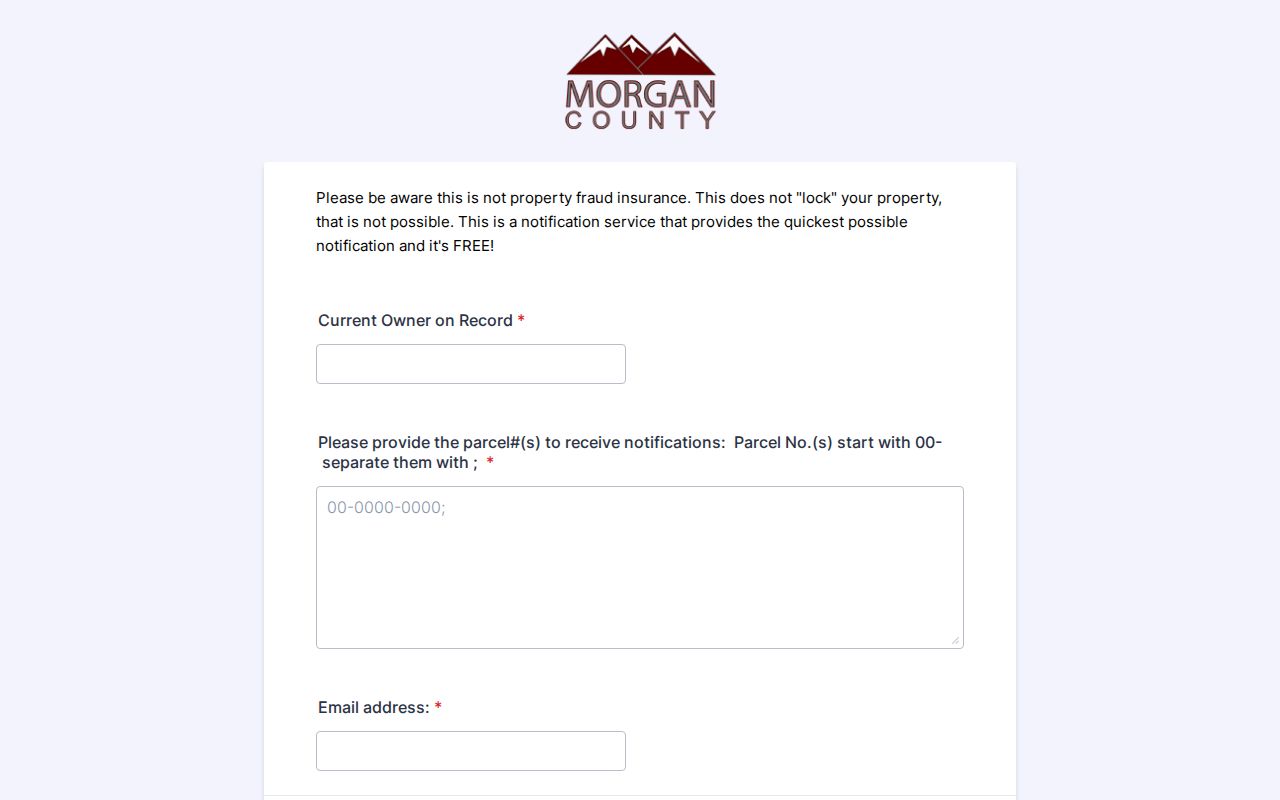
An alert just tells you to inspect a record.
Use a Morgan County Parcel Key Before Matching a Name
Addresses make weak search keys. They arrive incomplete, directional, or out of date. Morgan City anchors its numbering at Young Street and State Street/SR 66. That helps decode older directional references. Search by address first, then save the parcel number and legal description it returns. That pair is the real key. When a name search returns several entries, the parcel and situs settle which one concerns the property in question. Start instead with the Morgan County Assessor's advertised address mode when no parcel number is at hand. Field names vary between applications. Use Morgan County's own search application, and contact the Morgan County Assessor if a key is rejected. The map can orient you, but the legal description decides the parcel, not the picture.
When a Morgan County Owner Search Is Incomplete
A missing result proves nothing about ownership. It usually means the search missed. The public Assessor application depends on JavaScript, so plain-text tools may not read it. Try another mode. Keep leading zeroes in a parcel identifier. Check the Morgan County Recorder by party role or legal description as well. Records that never made it online can still be requested from the county office that holds them. Utah's Safe at Home program adds another wrinkle. It supplies substitute addresses and suppresses location details for protected participants, so a public database may omit or alter an address, and that limit deserves respect rather than workarounds.
What a Morgan County Owner Search Cannot Establish
A public owner record has limits. It cannot say who lives at the address, whether an owner will answer a message, or whether the deed trail is free of competing claims. It is not a title search. Protected-address rules can hide details too. Answer the question of who owns a Morgan County property from the recorded deeds and the tax roll, and use the answer only for a legitimate property purpose.
Lawful use. Use a Morgan County owner lookup for property research, due diligence, or civic purposes. Never use owner information to threaten, stalk, or harass a person.