
What a Morgan County Deed Record Tells You
A recorded deed is one instrument in the public land-record trail. It names the parties. It gives the land description and the terms filed. The Morgan County Recorder records, stores, and retrieves land documents and provides copies for a fee, per the office's own description. Recording proves a document entered the county record. It does not decide whether a transfer is legally complete or whether some other interest exists.
| Deed Type | What It Does | Common Use |
|---|---|---|
| Warranty deed | Review the promises stated in the filed instrument | Commonly associated with a conveyance; read the actual terms |
| Quitclaim deed | Transfers whatever interest the grantor has, if any | May appear in a family or title-correction history |
| Trustee or executor deed | Names a fiduciary acting for a trust or estate | Check authority and related probate or trust material |
| Correction deed | May amend or clarify an earlier recorded instrument | Compare it with the deed it references |
| Mortgage, lien, or release | Records a claim or later satisfaction, rather than a sale by itself | Follow later filings to understand the record sequence |
Deeds and mortgages can land in the same index period, yet they do different work. A deed records a conveyance. A mortgage or lien records a claim, and a release may later answer it. For Morgan County land, read the document type, parties, legal description, and any referenced instrument together. A mortgage entry is not proof of unpaid debt. One deed is not proof all claims were cleared.
Morgan County Deed Records Have Several Index Keys
The Morgan County Recorder's Research Portal indexes far more than names. Party name and role, document type, recording date, and clerk book and page all serve as search fields. Entry number and serial number work too. Land keys go further. Property address, city, ZIP, parcel number, subdivision, and plat reference each lead to filings. Block and lot work as well. That is a richer set than any name-only catalog. The parcel number bridges old and new. The deed may use lot and block while the address is modern. Keep both descriptions in your search notes.
| Index field | Use in a deed search | Record to keep |
|---|---|---|
| Party name and role | Find grantors, grantees, and other indexed parties | Exact spelling and role |
| Parcel, address, and city | Relate a filing to a known property | Parcel number and legal description |
| Document type and date | Narrow a transfer, correction, or later event | Recording date and type |
| Book/page, entry, serial | Retrieve a known reference | Every number as displayed |
| Subdivision, plat, block, lot | Search older platted land descriptions | Original wording and map reference |
The Morgan County Recorder Research Portal is the official application for Morgan County deed records. The tool is JavaScript-based. Its visible fields and result behavior show best in a live browser. Open the Research Portal for current search options.
An index entry is not the document. Pull the actual instrument before trusting a signature, clause, or legal description.
How Far Morgan County Deed Records Reach Online
The online Recorder index publishes no stated first year, and the point where imaging gives way to older volumes is not marked. Do not guess a start date. A failed online query does not mean the land history begins there. Ask the Morgan County Recorder which clerk books, pages, microfilm, or deed volumes cover your period. Name the parcel or parties in a date-range request. Add the instrument type when you can.
The portal's book/page, entry, and serial references help staff locate a filing even when a later image is unavailable. That reference matters more than the picture. Morgan County's map page is a separate source for ownership plats and historical map images. It orients an older legal description. It does not replace the deed index. Nor does it prove that every historical conveyance has been found.
Requesting a Morgan County Deed Copy
Morgan County Recorder's public page links a document-order form and a fee schedule. Copies come with a fee. The exact image pricing lives on the posted schedule. Search the index first. Save the instrument reference, the parties, and the recording date. Then follow Morgan County's current online-image, order-form, mail, or counter instructions. Decide whether you need a plain or certified copy. Confirm the payment method too. The county fee page is linked below. Check the Morgan County Recorder fee schedule and its linked fee document before ordering.
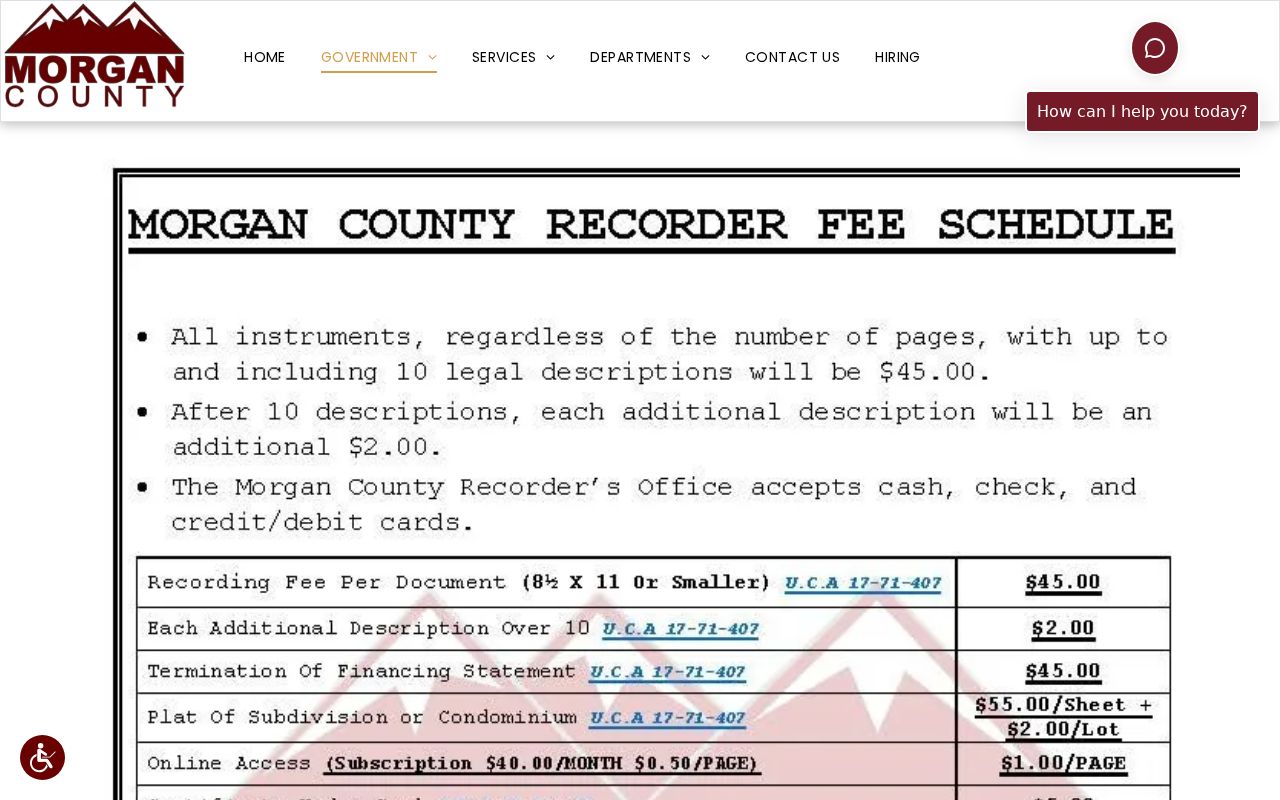
Fee amounts can change. Rely on the official schedule in force when you order, not a number quoted in advance.
Morgan County Deed Records Meet the 1889 City Plat
The Morgan County Recorder's map archive lists a July 1889 Morgan City Lots and Blocks map. That dated sheet can translate an old lot-and-block description into a place on the present-day map. Later records often skip modern addresses. They may cite a subdivision name, block, and lot instead. Keep the original words as you search. County sheets from 1930, 1956, and 1968 also appear in the archive. They orient roads before current numbering.
Springfield Acres appears on a 1941 map marked unrecorded. That label is a lead, not proof of a recorded subdivision. Compare any later recorded plat and deed first. The maps also carry infrastructure and rural-area names that can clarify a description without placing those sites inside Morgan City. The Recorder map archive lists the dated map references.
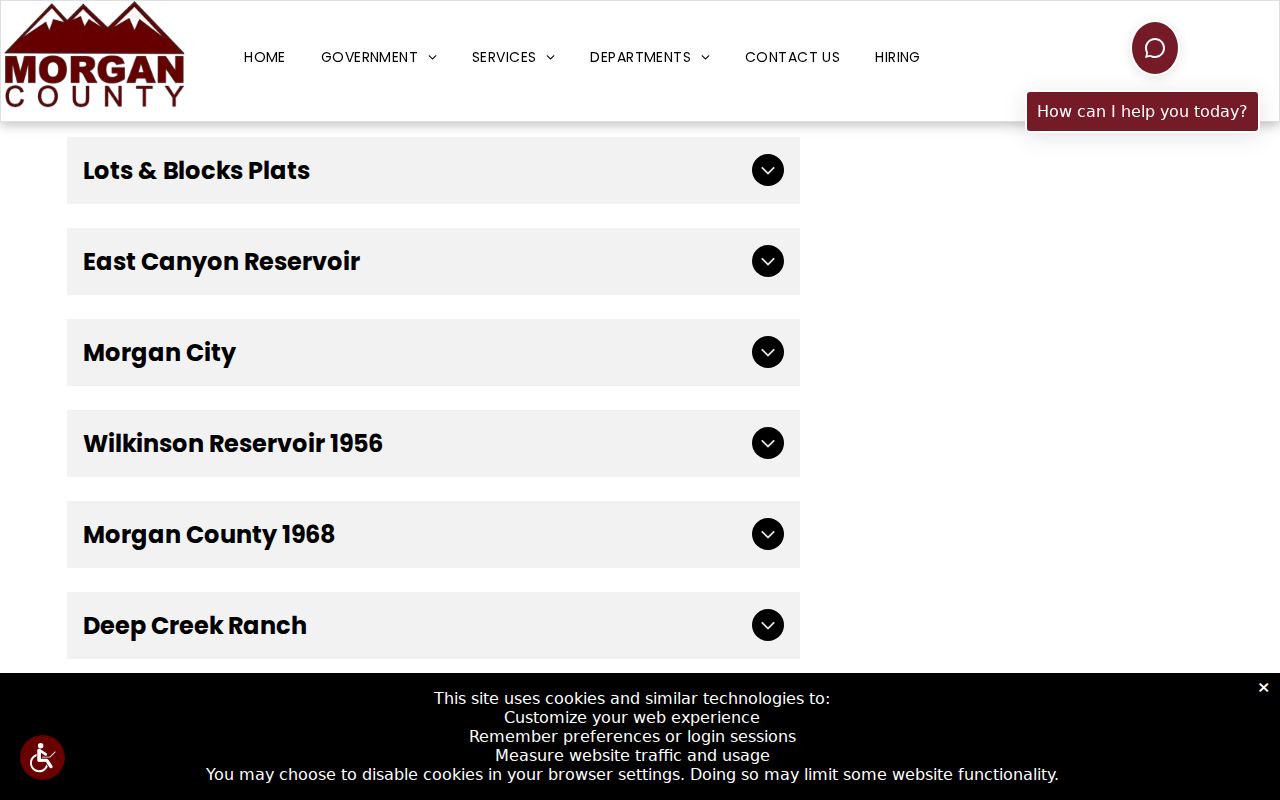
Cross-check the map, then confirm boundaries in recorded deeds.
Morgan County Property Watch Is an Alert Service
The Morgan County Recorder offers a free Property Watch service. Enrollment sends a notice whenever new activity is recorded against your name or parcel. An alert is only a prompt. It does not say whether a filing is valid or fraudulent. Open the flagged entry in the Recorder Research Portal, compare the party, the parcel, and the legal description, and request the document when its text is not visible online.
This service stands apart from the deed index and from a title search. Enroll through the Morgan County Recorder Property Watch form.
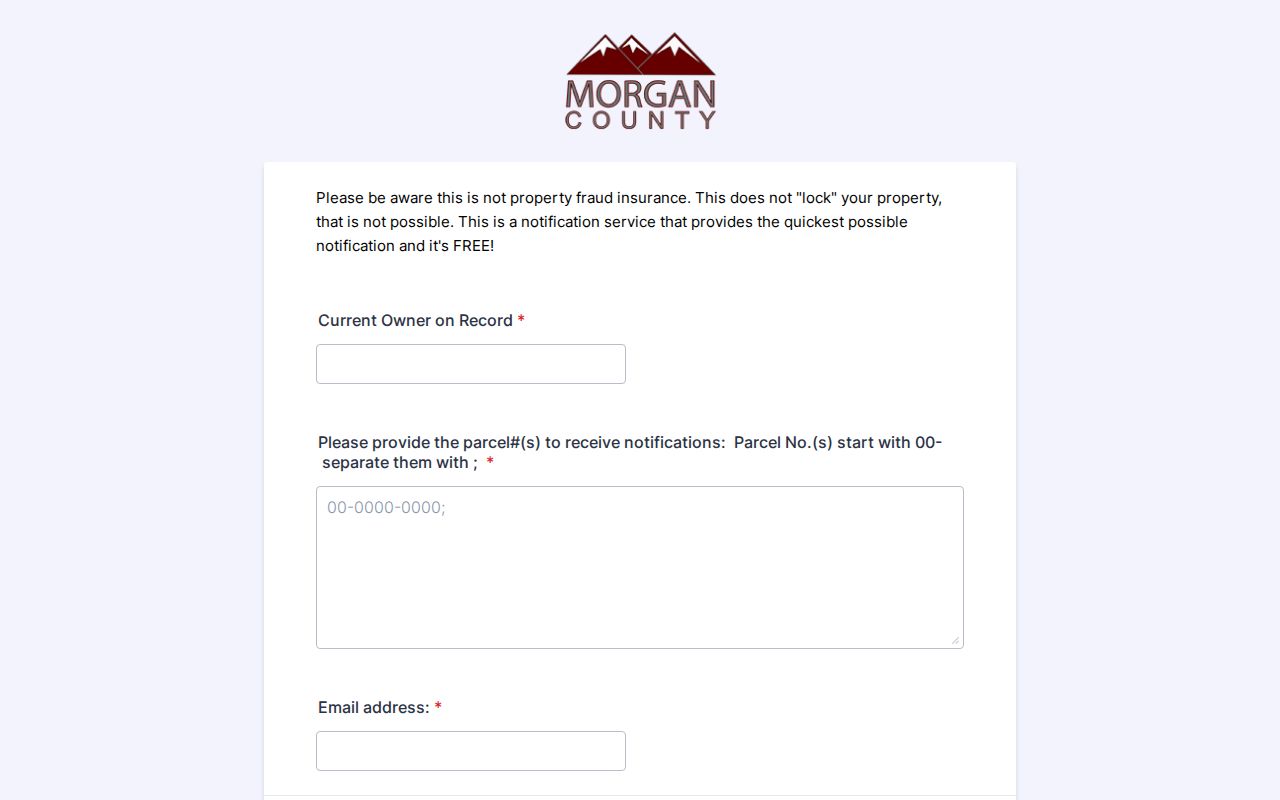
Keep the alert date and the official instrument number together when following up.
Reading the Morgan County Grantor and Grantee Index
The party-role field supports a simple chain-of-title method. Start from a likely current grantee. Inspect the most recent matching deed and note the grantor named in that instrument. Search that grantor as a prior grantee. That search shows how the person or entity acquired the land. Work backward only while the parcel description still matches. The Morgan County portal also carries parcel, plat, block, and lot references, which help when names change or one party owns several properties.
- Locate the latest likely deed using the parcel or current party as grantee.
- Record the grantor, grantee, recording date, instrument number, and land description.
- Search the prior grantor as a grantee and match the same parcel or description.
- Ask the Morgan County Recorder about older books when the online trail does not reach the date needed.
- Grantor
- The party identified as conveying an interest in the instrument.
- Grantee
- The party identified as receiving an interest in the instrument.
- Chain of title
- The sequence of recorded conveyances connected to the same land.
- Book/page and instrument number
- Different reference keys the Morgan County portal indexes for a filing.
Morgan County Deed Records Do Not Replace Title Work
The Morgan County Recorder states its limits plainly. It does not conduct title searches, research records over the phone, furnish legal descriptions by phone, or interpret legal documents. The limit matters. A chain can include a trust. It can include an estate, a correction instrument, or a name appearing in many records. The portal finds recorded material. It does not decide what a document means. It does not decide whether an unrecorded claim affects the land.
For a house-history project, the index and map archive still offer a useful public trail. A purchase is different. So is a boundary dispute or a legal claim. Each calls for formal title review with the underlying documents. The tax-roll owner and assessor valuation stay in their own lane. They never substitute for the recorded deed.
Where to Continue a Morgan County Deed Search
Portal coverage runs out at some point. When it stops before the period you need, contact the Morgan County Recorder with the parcel number, the original legal description, the party names, and the date span you have already checked. Ask which historical books or imaging sources cover that range. Ask how to order copies. The office is the authority on the next volume or index to inspect.
An older Morgan City lot pairs well with the 1889 lots-and-blocks map and later plats. Rural land is different. A rural map label may supply a clue, but it is not a recorded subdivision. Keep two dates straight. The document date is not the recording date. The portal indexes by recording date and may show the document date separately.
How to Obtain a Morgan County Deed Copy
Match the index hit to the parcel first. Then use the Morgan County Recorder's document page or order form to request the underlying record. Copies cost a fee. The county posts a fee-schedule link, so check it for the current price. Include the recording reference and copy type. Confirm current payment and delivery instructions with the office.
If the right instrument is unclear, give the parcel and party clues instead. Do not ask the recorder to run a title search.
Recorded, not guaranteed. A Morgan County deed index shows filings in the record, not a legal opinion that title is clear. Use a qualified title professional for that determination.