
Separating Morgan County Property Value Figures
Morgan County's roll keeps market value and taxable value apart. Utah assessment rules govern the taxable figure. A sale price in a deed or tax-roll field is different. It records a prior transaction. The property, the market, or the terms may have shifted since then. Read each Morgan County property value figure by label and tax year, checking exact field names and history displays in the current Assessor application.
| Value | What It Is | Where |
|---|---|---|
| Market value | Assessor's fair-market estimate for valuation purposes | County Assessor tax roll |
| Taxable value | Value after applicable assessment classification and exemption rules | County Assessor tax roll |
| Last sale price | Price associated with a prior transaction, if exposed in the record | Recorded deed and any Assessor field shown |
| Land and improvements | Separate value components, if the live parcel card exposes them | County Assessor tax roll |
Utah assesses an eligible primary residence at 55 percent of fair market value once the 45 percent residential exemption applies. Other property is generally assessed at 100 percent. Classifications and exemptions can adjust either figure. This gap explains why market and taxable value sit so far apart on many Morgan County parcels. It does not set a selling price. Before using either number in a tax calculation, compare the two value fields and the classification on the parcel record.
How Morgan County Assessed Value Is Timed
Morgan County values real property as it stood on January 1. That date anchors the roll. It is a snapshot, nothing more. Property characteristics are reviewed once every five years. January 1 is not a buyer's offer date, a lender's appraisal date, or even the day the online card refreshes. The county's published calendar also sets real-property roll closing dates of May 22 and October 30.
A Morgan County property value often comes from mass assessment. The Assessor weighs comparable characteristics and market information across many parcels at once. No parcel-level formula appears in the public search. Neither does a comparable-sale list. If a value looks out of step with the land, check the recorded characteristics and classification with the Morgan County Assessor rather than treating the portal number as a live appraisal.
The Assessor valuation page explains Morgan County's calendar.
A value only means something with its date attached. Match the date on the notice to the tax year to see which assessment snapshot the displayed figure belongs to.
Finding a Morgan County Assessed Value
The Morgan County Assessor runs one public Parcel/Name/Address Search. Use the situs address when the parcel number is unknown. Copy the parcel number and legal description once the record appears. Then you can find the same land again. The search screen is only an entry point. Value fields appear only after a live query. When market, taxable, land, improvement, or sale fields show up, record their labels and tax year exactly.
Never infer a value history from a single number. One year's roll entry may carry a different classification or exemption than the next. Ask the Morgan County Assessor which figure is the full market estimate and which is taxable when a display is unclear. Use the official Morgan County Parcel/Name/Address Search.
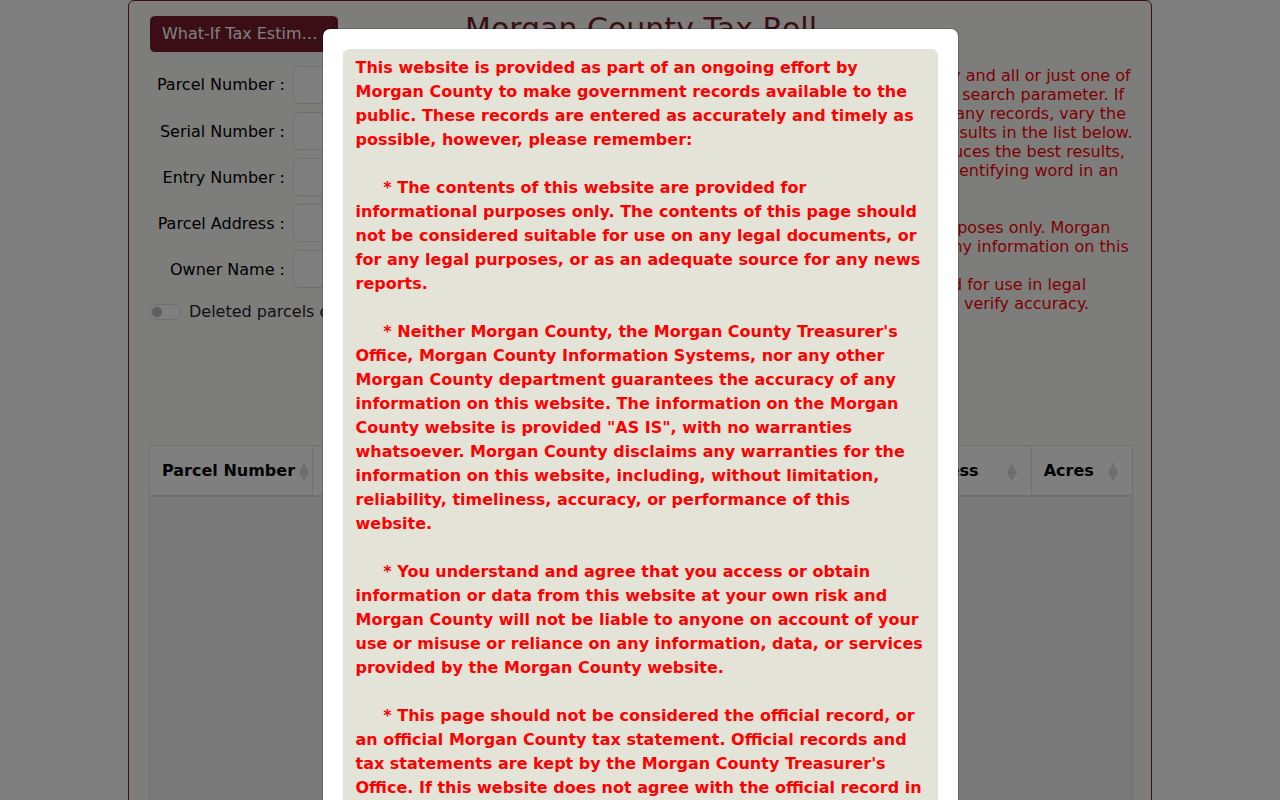
The search screen is not a sample parcel card. Check the exact value fields after running a live query.
A Morgan County Last Sale Is a Historical Price
A deed records a transfer, sometimes with a hint of the consideration behind a sale. The Morgan County Assessor may separately list a sale date or reference on the parcel record. Neither source guarantees a complete price. A deed index hit is not a price tag. Read the instrument itself and any amount stated in it. Then compare its recording date with the Assessor roll.
The last sale price reflects a past deal between particular parties under particular conditions. Its terms were its own. The property, market, or both may have changed since. Use the figure as one historical reference, not an appraisal or a guaranteed offer price.
Classification Changes Morgan County Taxable Value
Utah's residential exemption generally leaves 55 percent of fair market value assessed on an eligible primary residence. Other property is generally assessed at 100 percent. Classifications and exemptions still apply. The result is optical: two nearby parcels can show taxable figures far apart while their market estimates sit close. Check the actual status on the Morgan County Assessor's record for the property and year. Guessing from a home's appearance will mislead you.
Two amounts matter: assessed market value and taxable value. The bill, relief forms, exemptions, and appeal timing are covered in the Morgan County property tax records guide. Treat those as separate tools for separate questions.
Morgan County Population Change Is Not a Price Index
A city population estimate or a new subdivision proposal is not a measured property-value trend. Morgan City's estimate rose from 4,081 in 2020 to 4,455 in 2022 in the research material, but those counts describe population, not the sale price or assessed value of homes. The research did not locate an official Morgan City neighborhood-level value series or identify a fast-appreciating district.
For a specific Morgan County property, use the Morgan County Assessor's current value record and any available year history. For a market opinion, use a licensed appraiser or qualified real-estate professional and comparable transactions that match the parcel's characteristics.
A reported population change, a proposed subdivision, or a change in zoning can affect questions people ask about value, but none of those facts is a measured sale trend. Morgan County's published assessment process values property as of January 1 and reviews characteristics every five years. A researcher comparing two tax years should check whether the parcel classification or exemption changed before attributing the difference to market movement. Keep the property's value type, tax year, and source office attached to every number.
Morgan County and Utah Parcel Data Can Have Different Dates
Dates can differ across sources. The Utah SGID basic parcel layer updates on a rotating schedule. Land Information Record data updates annually once county roll data arrives. A statewide parcel export may lag. A statewide map may lag too. So the state data can trail the Morgan County Assessor's own tax roll. For current tax-roll value, trust the Assessor. When comparing geography or parcel records across systems, keep the state dataset's update metadata with the comparison.
GIS parcel features are reference data. They do not establish a sale appraisal. Never lift a number from an older map into a current valuation question. Check the Morgan County tax record first.
How to Look Up Morgan County Property Value
Start with the public Assessor search. Use the parcel number so the value stays tied to the right land. Check whether the displayed amount is market value or taxable value. Note the tax year. The public application requires JavaScript. Open the live record and confirm the parcel-card field labels there yourself.
- Search by address, owner name, or parcel number in the Morgan County Assessor portal.
- Copy the parcel key, tax year, and value labels shown in the live card.
- Compare market and taxable value without treating them as the same number.
- Use a recorded deed for the prior transaction and a licensed appraisal for a current sale opinion.
- Market value
- Morgan County Assessor's estimate of fair market value for the tax roll.
- Taxable value
- The amount remaining after applicable classification and exemption treatment.
- Assessment level
- The share of market value assessed under Utah's applicable rules.
When a Morgan County Value Needs Explanation
A value that looks wrong has usual suspects. Verify the parcel number first. Then check the tax year, property characteristics, and classification. A bad situs or parcel match pulls the wrong record. A missing exemption shifts taxable value without touching the market estimate. The Morgan County Assessor reviews characteristics on a five-year cycle, though no fixed review date is published for an individual parcel.
Before comparing any Assessor figure with a sale price or another year's notice, ask the office how a field is defined. A valuation appeal runs through the Board of Equalization process, which sets its own notice-based filing window and is described on the tax records page.
Limits of a Morgan County Assessor Value
A Morgan County assessed value exists for taxation under Utah's assessment rules. It is not an offer. It is not a sale guarantee, a lender's appraisal, or a survey of physical condition. Market and taxable value also diverge when classifications or exemptions apply, and a number can lag a later sale or a changed feature until the public record catches up.
Value vs price. An Assessor value is a tax-roll estimate, not what a Morgan County property will necessarily sell for. Obtain a licensed appraisal when a current market opinion is needed.