
Start a Morgan County Former-Owner Search With the Parcel
A former-owner search runs backward, party by party, rather than pulling a broad list of names tied to an address. First identify the parcel. The Morgan County Assessor roll gives the legal description. Copy every word. Then locate the newest matching deed in the Morgan County Recorder portal. For each earlier transfer, take the grantor as your new grantee name. Confirm the land description still fits. The county publishes no start year for its online index and no microfilm cutover date, so ask the recorder which older source covers a given era rather than guessing a cutoff.
| Source | Known coverage | Where to check | What it may show |
|---|---|---|---|
| Recorder Research Portal | Online starting year not located | County Recorder portal | Indexed parties, roles, dates, document types, and land references |
| Older deed books or microfilm | Cutoff and exact volumes not confirmed | Ask Morgan County Recorder | Earlier recorded conveyances if retained in older formats |
| Morgan City historic maps | 1889 lots-and-blocks map listed | Recorder map archive | Historic lot, block, and street context |
| Other county map sheets | 1930, 1956, and 1968 map runs listed | Recorder map archive | Road and parcel orientation for older descriptions |
Work online when the instrument is indexed. When it is not, ask the Morgan County Recorder which older source covers the needed date instead of guessing a cutoff year.
| Transfer date | Grantor to grantee | Deed type | Book/page or instrument |
|---|---|---|---|
| Read from matched deed | Copy both parties | Copy portal category | Copy every reference |
| Next prior transfer | Search prior grantor as grantee | Read the next instrument | Record the next reference |
| Source | Years It Covers | Where Held | What It Shows |
|---|---|---|---|
| Recorder deed index | Online coverage start not located | Recorder Research Portal | Indexed transfers and related instrument details |
| Older deed volumes | Earlier coverage requires Recorder confirmation | Ask Morgan County Recorder | Potential prior conveyance records |
| Historic plats and maps | Named map dates vary | County Recorder map page | Lot, block, and land-reference context |
| Assessor roll | Tax-roll records; historical extent not confirmed | Assessor portal or office | Owner field and parcel context for a tax year |
Recent transfers live in the Morgan County Recorder's index. Match its parcel and party fields to your property. Older Morgan City descriptions are different. The 1889 lots-and-blocks map works as a locator while you keep searching the actual deeds. A Morgan County Assessor roll entry can anchor an owner for one tax year, but a tax roll is never a substitute for the deed itself. Old tax rolls sometimes sit with a library or archive. Ask the custodian first.
Morgan County's Grantor-Grantee Index Runs Backward by Party
The Morgan County Recorder application offers Party Name and Party Role as search fields. The grantee receives the interest. The grantor conveys it. First find the deed matching your parcel and the parties involved. Record both parties. Then search the grantor as grantee to reach the prior acquisition. Repeat only when the next description fits. A correction deed, an estate transfer, or a conveyance into a trust can shift the name pattern. The parcel itself does not move in those cases.
Other fields widen the net. Document type, recording date, clerk book and page, entry number, serial number, address, city, ZIP, parcel number, subdivision, plat, block, and lot all help. Each one can narrow a search. Some entries also link a legal description, signatures, prior transaction references, or document pages.
Open the Morgan County Recorder Research Portal for live party and land searches.
Save the role and recording date because they determine which name to search next.
Legal Descriptions Bridge Old Morgan County Names
Street addresses age badly. An old deed may carry none at all. A legal description and parcel number form a sturdier bridge from a present Assessor result to an older Recorder entry. The portal indexes subdivision, plat, block, and lot. Keep those words exactly as written. When a name search returns several parcels, the lot and block separate the right transfer from its neighbors.
Morgan City measures addresses from Young Street and State Street/SR 66. An old directional address may look unfamiliar. Search the old name and the current parcel separately, then let the recorded description join them.
The 1889 Morgan City Map Is a Time Anchor
The Morgan County Recorder lists a July 1889 Morgan City Lots and Blocks map. It gives early city deeds a geographic frame. The office also lists a 1941 Springfield Acres map marked unrecorded. It also lists a 2014 Morgan City Survey Subdivision ownership plat for Lot 2 Block 27. Keep the three distinct. The early map locates land. The unrecorded sheet is a historical clue. The later plat is its own dated record.
The inventory runs deeper. Sheets from 1930, 1956, and 1968 appear. So do named entries like Wilkinson Reservoir, Patterson, airport maps, and Enterprise-Stoddard. Some rural names help interpret a land description. But none should be read as Morgan City subdivisions.
Browse the Morgan County Recorder map archive for historic map entries.
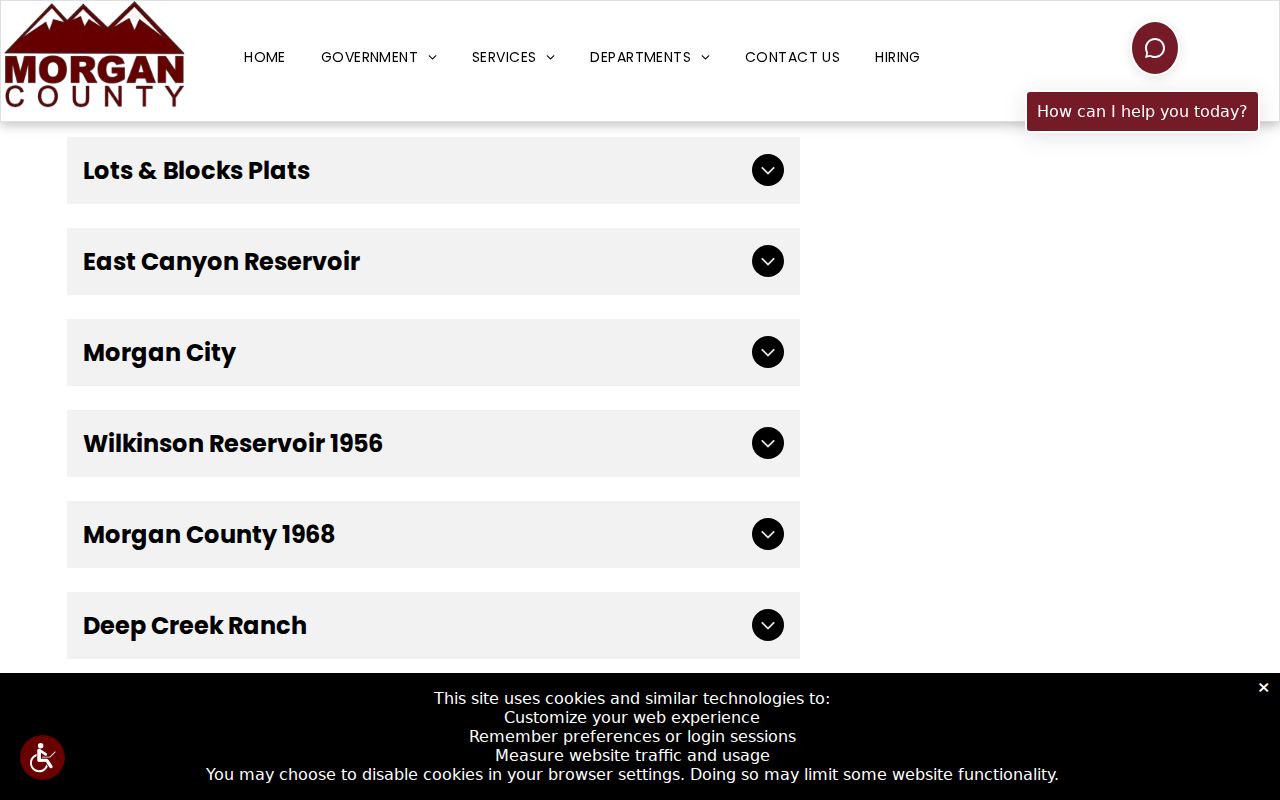
Orient with the map, then prove every transfer by deed.
Estate and Correction Deeds Can Change the Morgan County Chain
Not every chain reads as a clean seller-to-buyer sequence. An estate representative may convey the property. A trustee may act for a trust. A correction deed may refer back to an earlier filing. Search each party in the role shown and follow the instrument references inside the document. Probate can explain someone's authority, but the transfer itself still has to appear in the Morgan County Recorder's land records.
Utah vital records follow their own rules by type. Certified birth copies go only to authorized applicants. Death certificates generally become public after 50 years, while marriage and divorce records move through county-clerk or court channels. These papers may explain a name or an estate event, but they are not ownership instruments. Use the state application, and confirm current rules first.
Consult the Utah Office of Vital Records and Statistics for current certificate rules.
A vital record can help fill in historical context around a family or a holding. Still, the recorded deed stands as the legal source for the land transfer itself in Morgan County.
Walk a Morgan County Deed Chain Backward
Start with the newest matching deed. From there, work backward. Each instrument names a grantor who once appeared as a grantee on an earlier deed. That earlier deed becomes your next target. The Morgan County Recorder portal supports this climb with role-based party search plus parcel, legal-description, and instrument-reference fields. You can match names to roles rather than guessing. Keep one row of notes per transfer. Record the deed date and the recording date. Note the grantor, grantee, deed type, parcel description, and the book/page or serial reference. When a name or legal description mismatches, stop and resolve it before reaching for an older instrument. One skipped link can send the whole chain down the wrong parcel.
- Find the latest deed that matches the current parcel and note its grantee.
- Read the grantor and complete legal description from the instrument.
- Search that grantor as a grantee and match the earlier land description.
- Continue one recorded transfer at a time, asking the Morgan County Recorder about older sources when needed.
- Grantor and grantee
- The parties identified as conveying and receiving an interest.
- Chain of title
- The sequence of recorded instruments connected to one parcel.
- Legal description
- The written land description used to verify that each deed concerns the same property.
Ask the Morgan County Recorder About Older Volumes
The county publishes no stated start year for its online deed index. The Morgan County Recorder's map page offers map and plat material. It says nothing about when deed books or microfilm give way to digital records. So the indexed coverage ends where it ends. When your chain stops there, contact the office with the parcel number, the legal description, the last grantor or grantee you can name, and a date range. Ask which book, page, film, or historical index covers the gap. Ask how to order a copy.
Never assume a courthouse loss or invent a cutoff year. A dead-end search often just means a name variant. It can also mean a changed legal description or an older volume no one indexed yet. Write down what you already searched. That lets the next request focus on what is still missing.
Morgan County's 1862 Origin Sets a Research Question
Morgan County was organized in 1862. North and South Morgan later joined as the incorporated Morgan City in 1868. That history matters for deed research. Older instruments may use place or subdivision names that no longer appear on modern maps. It does not tell you where pre-1862 Morgan-area deeds actually sit. A parcel that reaches back before county organization belongs to a predecessor jurisdiction. The Morgan County Recorder or Utah State Archives can say which land record source applies.
Start from the current parcel number and legal description. Treat any historical county name as a clue, nothing more. Only a dated instrument in the deed records confirms the real connection.
How Far Back Morgan County Ownership Records Go
Morgan County's Research Portal takes a property search only so far. Its coverage reaches just as far as its indexes go. The map archive, likewise, is not proof of a complete chain of title. Need something older? Ask the Morgan County Recorder which deed books or other custody sources cover the period. Before assuming where a parcel sat, remember one thing. Searches predating Morgan County's 1862 organization require the correct predecessor record source.
Lawful use. Use former-owner research for house history and property diligence. Do not use records to track, threaten, or harass a living person.