
Reading a Morgan County Property Tax Record
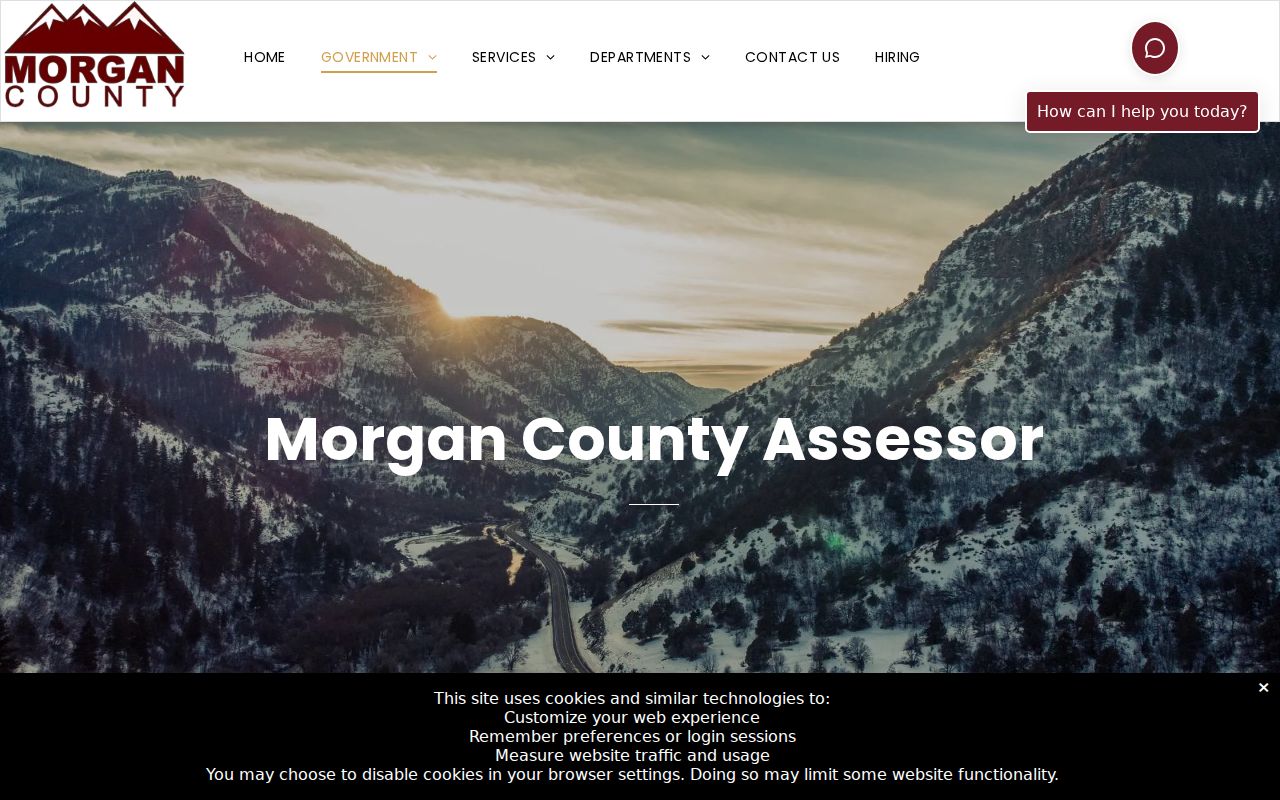
Assessment and collection live in separate records. Start with the Morgan County Assessor's public Parcel/Name/Address Search, which shows the owner of record, situs and mailing addresses, classification, market value, and taxable value for a parcel. The Treasurer's side covers prepayment, collection, and delinquency. Keep the two straight when reconciling a bill. The Assessor builds the roll; the Treasurer reports what has been paid on it.
| Field | What It Shows | Where |
|---|---|---|
| Market value | Assessor's fair-market estimate for the tax roll | County Assessor |
| Taxable value | Value after applicable classification and exemption rules | County Assessor |
| Property classification | Whether the parcel is treated as a primary residence or another class | County Assessor |
| Tax bill and status | Amount due and payment or delinquency information | County Treasurer |
| Taxing units or charges | Use the live bill to inspect any listed breakdown | County Treasurer |
Market value and taxable value are different figures. Utah generally assesses an eligible primary residence at 55 percent of fair market value once the 45 percent residential exemption applies. Other property is generally assessed at 100 percent, depending on classification and exemptions. The bill carries the tax calculation and the collection record. So a property tax record explains how the public assessment is treated, not what a buyer would pay or what a licensed appraisal would conclude.
Morgan County Values Are Set From a January 1 Snapshot
The Assessor values real property as it stood on January 1. That single date anchors the valuation for the roll. It does not mean values change only once a year. A sale does not trigger a reappraisal either. Morgan County also reviews property characteristics once every five years. Additions, corrected characteristics, and market shifts can all affect an assessment. The public material promises no fixed annual percentage and no parcel-specific update date. So treat those as possibilities rather than rules.
The county posts real-property roll closing dates of May 22 and October 30. Truth in Taxation notices are mailed July 22 through July 31. Use the calendar posted for the tax year you are researching. Applying an old calendar to a later bill invites errors. Check the parcel classification and exemption along with the dollar figure. Those fields drive how the value is used.
The Assessor's valuation calendar is the official source for the schedule.
Note: Save the tax year and notice date with your notes so later comparisons stay within the same assessment cycle.
Why Eligible Morgan County Homes Use a 55 Percent Level
Utah's primary-residence exemption cuts the taxable assessment for a qualifying home by 45 percent. That leaves 55 percent of fair market value assessed. Morgan County's own material describes other property as generally assessed at 100 percent. That figure is subject to classification and any exemptions. These percentages describe an assessment level. They are not a tax rate and not a discount off a sale price.
Two nearby parcels may not show the same taxable share. Use classifications or exemptions can differ. For any Morgan County tax record, compare the market value, taxable value, and classification for the same tax year. Keep the comparison within one tax year. If a primary-residence exemption is missing or a classification looks wrong, follow the Assessor's current instructions. Do not adjust the figure yourself.
Morgan County Treasurer Access Has Two Routes
The Treasurer Web screen offers two entry points. One is a public taxpayer route for ordinary property owners, requiring no title-company login. The other is registered tax-certificate access built for title companies and their workflow. The Treasurer's county page also links prepayment instructions, a delinquent-tax resource, and a tax-relief form. When you use the public lookup, carry the parcel number from the Morgan County Assessor record with you. That habit prevents mistaken matches on similar accounts.
Use the Morgan County Treasurer Web public taxpayer entry.
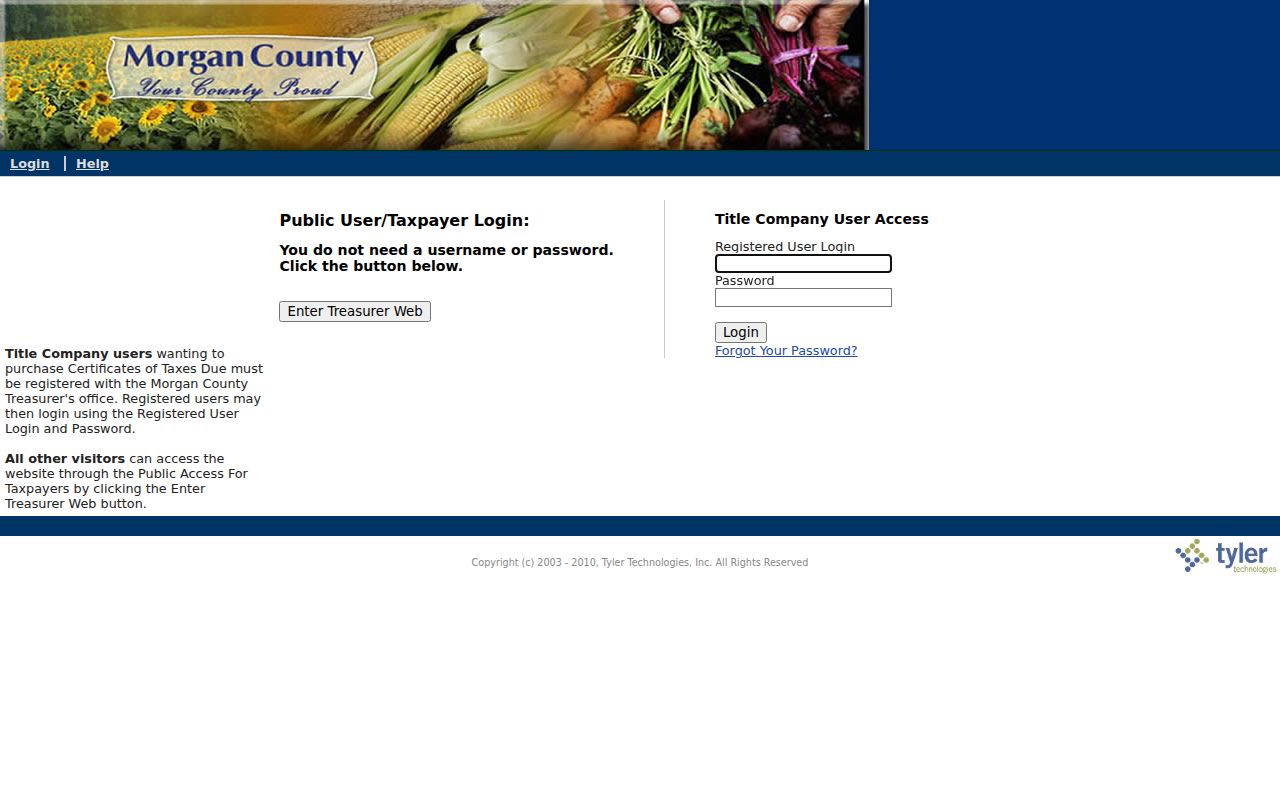
A title-company certificate login is not the public tax-bill search route.
November 30 Is the Morgan County Property Tax Due Date
The published calendar puts Morgan County property taxes due November 30, delinquent after that date. A due date and a current balance are separate facts. A bill may be paid, partially paid, or delinquent depending on the Treasurer's live record. Confirm the status for the parcel and tax year through the public taxpayer lookup. You can also contact the Treasurer directly.
For an older parcel, compare the bill with the Morgan County Assessor tax roll. The situs address alone may not identify the account. A tax notice can go to an owner address different from the property. Keep the parcel identifier and tax year in any request. Paying early? Check the Treasurer page for current prepayment instructions before the full bill comes due.
Morgan County's 2026 Tax-Sale Notice Was Specific
Morgan County announced that no tax sale will be held for the 2026 cycle. That notice covers one year only. It says nothing about a parcel's balance. Nor does it set a rule for later years. Delinquent property tax records still matter even when no sale is announced for a given cycle. A delinquency entry concerns collection, never title. Deed records and ownership documents stay in the Recorder's system instead. Treat a tax-sale notice as a status update, not proof of who holds title.
Check the Treasurer page for the latest status. The live account record governs the specific land. If an account appears overdue, ask the Treasurer what the current payment record shows before relying on a search result. The Treasurer page also links prepayment instructions and a delinquent-tax resource. Those official routes are safer than a saved copy or an outside repost.
A county-linked 2025 back-tax report from a third party sits outside the official route, so the Treasurer's own material should control. A no-sale notice never erases a balance. It cannot establish another year's status either. For any property tax record, keep the tax year, parcel number, and payment date shown in the live public account.
How to Check a Morgan County Property Tax Bill
Start with a parcel number when you have one. Otherwise begin at the situs address in the public Treasurer taxpayer route, then confirm the returned account against the Morgan County Assessor roll. Morgan County property tax records should be checked year by year, because balances and payment states shift over time. If a portal result is unclear, contact the Treasurer through the Morgan County Treasurer page. Give them the parcel number. Never infer status from a prior bill.
- Open the public taxpayer entry in Morgan County Treasurer Web.
- Search the parcel or address and select the matching tax account.
- Record the tax year, balance, and payment status shown by the Treasurer.
- Compare the Morgan County Assessor classification and exemption if the taxable amount looks unexpected.
- Market value
- Morgan County Assessor's fair-market value estimate for assessment purposes.
- Taxable value
- The value remaining after applicable classification and exemption rules.
- Residential exemption
- Utah's 45 percent exemption for a qualifying primary residence.
- Delinquent tax
- A property-tax amount unpaid after Morgan County due date.
Truth in Taxation Notices Start the Morgan County Appeal Window
Morgan County's Assessor calendar puts Truth in Taxation mailings between July 22 and July 31. The Board of Equalization appeal period then runs 45 days from mailing. Or it runs until September 15. Whichever is longer controls. That window depends on a mailing date as well as a calendar date. So read the current notice. Confirm the current instructions before filing. A generic annual date is not enough without the notice for the parcel.
A strong appeal file starts with the parcel number, tax year, and assessment notice. It also needs the specific market-value question. Comparable sales or corrected property characteristics may explain a disagreement. Morgan County's current submission rules still control what evidence and forms are accepted. Published timing is not a promise that any appeal will change the tax roll. The Assessor's Board of Equalization information is the official path to current forms.
Use the notice's mailing date to calculate your filing window, and keep proof of submission.
Morgan County Tax Relief Is a Separate Treasurer Service
The Treasurer's page links a tax-relief form alongside tax payment and delinquency material. Relief programs carry their own rules. Eligibility, application, and documentation each matter. Current qualifications and benefit amounts come from the county form itself. Confirm the route with the Treasurer. An exemption on the Morgan County Assessor roll does not automatically handle a relief application.
This is why Morgan County property tax records need to be read by source. The Assessor's classification and taxable value explain the roll. The Treasurer's account reflects collection. It also covers any payment or relief processing. Keep copies of notices and applications for the year at issue.
Challenging a Morgan County Assessment
An owner who disputes an assessed value uses the Board of Equalization. The Morgan County Assessor describes this process. Begin with the valuation notice. Identify the parcel, year, value, and property characteristics at issue. Compare the assessor's record with evidence tied to the valuation date. Do not rely on a later asking price. The board window follows the mailing date plus Morgan County's September 15 floor. So confirm the exact deadline printed in the current instructions before submitting material.
Appeal window. Morgan County lists 45 days from the notice mailing date or until September 15, whichever is longer. Verify the current filing instructions and deadline with the Morgan County Assessor.